Trilab DeltiQ 2 Plus Reviews: See Why 0 Shoppers Rated It 0 Stars!
It’s not just hype. The Trilab DeltiQ 2 Plus 3d printer earned its 0/5 from 0 real users. But what’s behind those stars?
 Supermod
  Moderator
 Recaptor
 Trilab DeltiQ 2 Plus 3D Printer Review: A Professional-Grade FDM Powerhouse
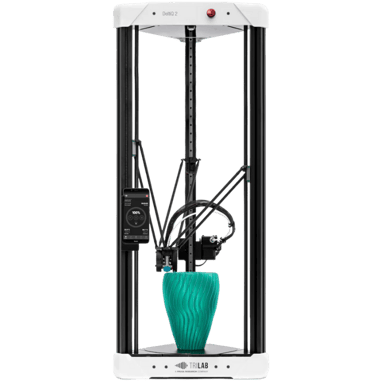
In the landscape of professional-grade 3D printers, the Trilab DeltiQ 2 Plus stands as a meticulously engineered offering from Poland designed primarily for advanced users engaged in prototyping and engineering tasks. Released in 2019, this FDM printer targets professionals seeking precision, sizable build volumes, and reliable functionality, all compounded by the convenience of a preassembled system. From its build volume to its smart connectivity options, the printer's specifications suggest it can handle demanding projects with high accuracy and repeatability, making it a compelling contender in its category.
Detailed Specs & Features
On paper, the Trilab DeltiQ 2 Plus boasts a generous build volume of 24543 cm³, illustrated by its sizeable maximum dimensions of 9.84 inches in both width and depth, and a towering 19.69 inches in height; ideal for tall prototypes and large parts. The original nozzle diameter of 0.4 mm supports versatile precision, further enhanced by optional nozzles including ultra-fine 0.25 mm and a robust 1.0 mm size. Complementing these features is a Bowden extruder design, known for its efficiency in filament feeding, capable of handling filament diameters standardized at 1.75 mm.
Equipped with a 100-240 Volt internal power supply, the printer ensures compatibility with international power standards, drawing up to 250 Watts during operation but dropping to a low 15 Watts on idle, with energy-saving mode available. This is combined with a heated bed that can reach up to 221°C, facilitating adherence for demanding materials like ABS and Carbon Fiber blends that require higher temperatures.
Connectivity-wise, the printer supports USB and Wi-Fi options, supplemented by remote monitoring and firmware updates, making it a modern piece of equipment for connected work environments. Additionally, the 6.5-inch touchscreen with a 1024x600p resolution adds ease to navigation and setup.
For materials, this model impresses with compatibility across a wide range of filaments, including PLA, PETG, ABS, ASA, and even specialty options like Carbon Fiber and Nylon; all supported under the same filament diameter and handled via a filament auto-loading mechanism. The necessity for filament drying is acknowledged, reflecting professionalism in handling moisture-sensitive materials that could affect print quality.
User Experience & Performance
Design & Build
The printer's delta frame design offers high-speed movement mechanics with rods and belts, ensuring smooth motion control. It measures 16.14 inches in width and 19.69 inches in depth within a height of 38.58 inches, making it a comparatively compact footprint for its build volume. Its magnetic, smooth build plate is removable, simplifying post-print handling. While it features no enclosure, leaving chamber heating out of the equation, integrated lighting inside the open chamber helps users inspect print jobs conveniently. Such design choices tilt towards professionals who value accessibility and minimal fuss over full enclosure climate control.
Performance
Performance figures align well with professional expectations. Its max print speed of 300 mm/s, with an effective print speed of around 200 mm/s, reflects a balance between rapid prototyping and quality retention. The printer can reliably print detailed parts with a layer resolution fixed at 50 microns, a sharp figure for FDM technology that ensures precise layer stacking and surface finish. Features like auto-bed leveling, filament runout sensors, and print recovery after power loss contribute significantly to a high print success rate of 95%.
Hardware & Extra Features
This 3D printer is particularly well-appointed with intelligent sensors, including filament jam detection and vibration compensation, to safeguard print quality. Additionally, safety features conforming to CE, FCC, and RoHS certifications underlie its reliability; an emergency stop button and automatic shutdown on error protect the device and the user from unforeseen faults. Its ability to support various slicers like Cura, Simplify3D, and PrusaSlicer without proprietary software constraints also enhances flexibility for professionals experimenting with diverse workflows.
Pros & Cons
Pros
- Robust build volume and precision layer resolution suitable for professional prototyping.
- Wide range of compatible filaments, including advanced composites like Carbon Fiber.
- Advanced safety and sensor features ensure high operational reliability.
- User-friendly touchscreen and solid connectivity options with remote monitoring.
Cons
- Absence of a heated chamber or enclosure could limit the printing of highly temperature-sensitive materials.
- No multi-material printing support restricts versatility in certain advanced manufacturing workflows.
- A relatively short warranty period of one year may prompt concerns about long-term maintenance costs.
Price & Value for Money
Priced at approximately $3699 at MatterHackers, the Trilab DeltiQ 2 Plus positions itself in the higher tier of FDM printers, a pricing justified by its extensive filament compatibility and professional-grade features such as print recovery and a broad build volume. While the one-year warranty period may feel modest, the availability of spare parts and tool-free maintenance ensures that user investment is protected through manageable upkeep. As a professional tool, it may not suit hobbyists but fits advanced users who require reliability paired with advanced material handling.
Quick Take
In short, the Trilab DeltiQ 2 Plus excels at delivering a spacious build chamber, high precision, and impressive material flexibility tailored for rigorous professional use. Its robust sensor suite and connectivity options support uninterrupted workflow and remote management. If we look at the numbers alone, it's a markedly dependable and well-engineered device for serious 3D printing professionals.
Closing Recommendation
This printer may be ideal for professionals focused on extensive prototyping with advanced composite materials who do not require enclosure-controlled temperature environments. It appears to perform best for users prioritizing large build sizes, precise layering, and smart connectivity features while accepting the trade-offs on warranty length and multi-material capabilities. Overall, it helps users achieve a high success rate in complex prints and streamlines production efforts with intelligent operational sensors.
Verdict
Rating: Based on the specifications and overall feature set, we believe Trilab DeltiQ 2 Plus deserves 4.3 out of 5.
- Winner Feature => Versatile filament compatibility combined with sizable build volume, ideal for professional tasks.
- Needs Improvement => Lack of a heated chamber and a limited warranty period may affect long-term high-temperature printing and user confidence.
Reviews 0
The good, the bad, and the brutally honest.Average Rating


More 3D Printers 453
Unlock more awesome finds.